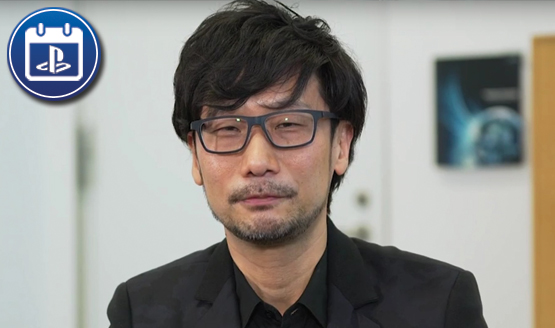
Hideo Kojima is a name that evokes many emotions among the gaming community — awe, wonder, excitement, respect, and more ‘80s throwbacks than you can shake a DualShock 4 at. He is, quite simply, a living legend; a video game developer whose talent spans producing, directing, developing and writing.
More than three decades on since Kojima joined, and subsequently left, Konami, the auteur has become synonymous with cinematic experiences that are as genre-defining as they are eclectic — here’s looking at you, Metal Gear Solid — and one need only look at the delirium generated by Death Stranding for proof that Kojima-san hasn’t lost his knack for confounding spectacle.
That’s something we’ve already picked apart frame by frame here at PlayStation LifeStyle — and left none the wiser — but today, August 24, marks a special occasion: Hideo Kojima’s birthday. So, what better way to celebrate than have a look back at the developer’s greatest contributions to the industry?
Welcome to This Day in PlayStation History, our new and recurring feature designed to spotlight the birthdays, anniversaries and milestones deemed important to the PlayStation Faithful. After ringing in Devil May Cry‘s 15th year on the market just yesterday, let’s welcome Metal Gear‘s founding father into the spotlight on this, his 53rd birthday.
Influenced by cinema from an early age, Kojima-san initially harbored dreams of one day becoming a film director, and set about immersing himself in the world of celluloid before ultimately plotting course for the video game industry. He never lost an eye for the cinematic, though, even hinting at his eventual transition in an early interview.
“In ‘The Great Escape,’ there’s that scene where [Steve] McQueen is trying to escape from the Nazi camp. I wondered, ‘What if I could simulate this in a game?'”
This was during the ‘80s, at a time when video games were fast becoming a medium on the brink of worldwide acceptance. It seeded a change of heart in Kojima, too, who used such seminal hits as Super Mario Bros. and The Portopia Serial Murder Case as a motivational springboard to propel himself into the gaming industry. But such blue-sky thinking hit a snag pretty early on.
Can Love Bloom on the Battlefield?
For all of Hideo Koijma’s feverish ambition, the would-be developer saw most, if not all of his pitches rejected as his struggle to break into the developing scene wore on. Undeterred by early setbacks, Kojima preserved — a resilience that would earn him a spot on Konami’s home computer team as a designer and planner.
But getting his foot in the door proved half the battle. Still Kojima pitched new gameplay ideas and still he found that many of them were overlooked; shunned due to his own lack of programming experience. Indeed it’s said that these trials and tribulations came close to pushing Kojima out of Konami altogether — a fate that wouldn’t form for more than three decades — but he hunkered down and kept pushing.
Still eager to cut his teeth, Kojima was then presented with the chance to take point on Metal Gear, an action game that would go on to release on MSX2 in 1987 and the term Metal Gear would forever be associated with bipedal tanks and nuclear warheads.
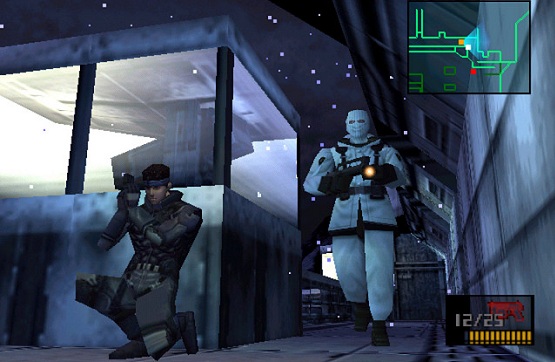
Technical limitations be damned, even then, Hideo Kojima injected his own creative tendencies into the humble franchise-starter, citing The Great Escape as a key point of reference as he chronicled Solid Snake’s escape from Outer Haven.
When the 8-bit MG launched, the creator was 24 years young and after spreading his wings through a handful of other projects (Snatcher and the sci-fi noir Policenauts) Kojima was coaxed back to engineer a true sequel in the form of Metal Gear 2: Solid Snake. Although it wasn’t until Metal Gear Solid in ’98 that the humble designer became a household name.
Metal…Gear?!
It was here, just before the turn of the millennium, that Kojima-san was perched at the confluence of cinematic storytelling and scripted action sequences in Metal Gear Solid. Without question, MGS set a new benchmark for the medium, tackling button-pressing themes of nuclear proliferation and collusion.
That intoxicating brand of larger-than-life characters, intriguing world-building and lavish, anime-esque cutscenes would go on to become the lifeblood of the Metal Gear series as it slinked into the 3D space. Indeed after lending a helping hand to a series of other games under Konami — Zone of the Enders, Boktai, and Castlevania: Lords of Shadow included — MGS really became the focal point of Kojima’s career, and to date, the genre-defining stealth franchise spans 10 canonical titles across 7 console generations, culminating with the launch of The Phantom Pain late last year.
In what should have been the triumphant swan song for Kojima’s career at Konami, the sequel’s release was clouded by reports of an internal fallout between developer and publisher, eventually leading to Hideo Kojima departing the Japanese giant after more than three decades under suspicious circumstances.
As the publisher’s stealth flagship, Konami has committed to carving out new creative avenues for the Metal Gear series to explore, with Metal Gear Survive being the first entry in the company’s post-Kojima era. It’s a fairly radical departure, too, swapping tactical espionage action for a four-player co-op title set in an alternate timeline.
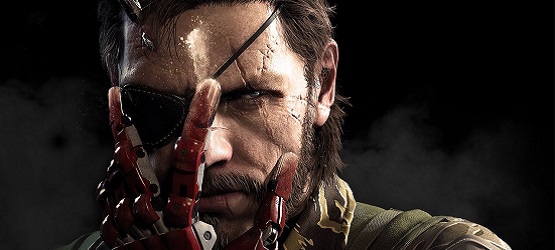
And that’s just Metal Gear Solid. After capturing the Internet’s attention with P.T., Konami had previously announced a new Silent Hills reboot, one which would have had Kojima collaborate with Norman Reedus and illustrious film director Guillermo del Toro. Sadly, that project was officially canned in April of 2015.
There’s still much we don’t know about that creative turnover, other than the fact that the auteur has since formed his own studio in Kojima Productions. Soon after partnering with Sony, the gaming icon took to the stage during E3 2016 in epic fashion to unveil Death Stranding, a PS4 action game that features a new collaboration with Norman Reedus. It’s bat-shit insane and we aren’t quite sure what it’s about yet — so definitely a Hideo Kojima game.
Looking back on Kojima’s prestigious portfolio, what are your fondest gaming memories? Indeed what are your hopes for the future of Kojima Productions and Death Stranding in particular? Drop your thoughts below below, and don’t forget to wish Kojima-san many happy returns via Twitter!
This Day in PlayStation History is a new and recurring feature here on PlayStation LifeStyle that will be acting as your window into the archives of all things PlayStation — birthdays, anniversaries, milestones and more.
Related Reading:
- This Day in PlayStation History: Devil May Cry
- Death Stranding: An Analysis of Hideo Kojima’s New PlayStation Exclusive
- Everything Wrong With Metal Gear Solid V: The Phantom Pain
Metal Gear Games Ranked
-
Ranking the Best and Worst of the Metal Gear Series
-
Time to Reflect on a Legend
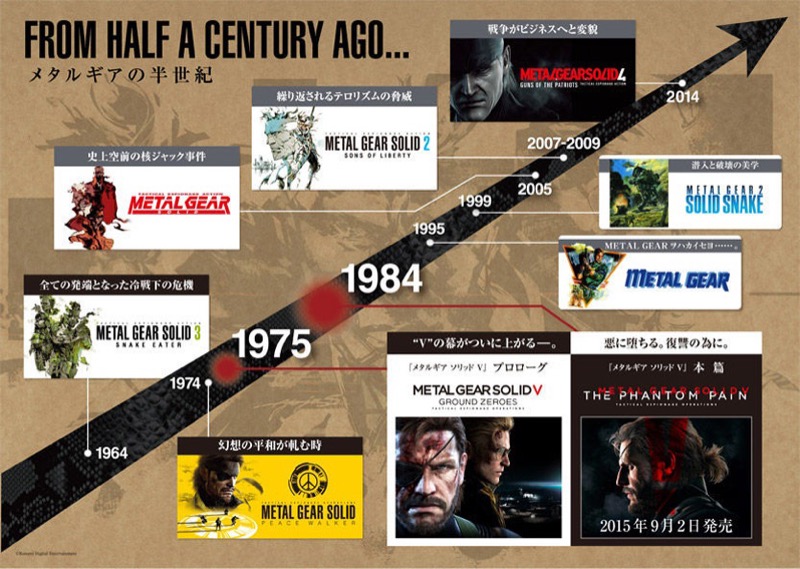
Now that The Phantom Pain is out and capturing the hearts and minds of the PlayStation faithful, we rank the best and worst of the Metal Gear series.
-
10. Ground Zeroes
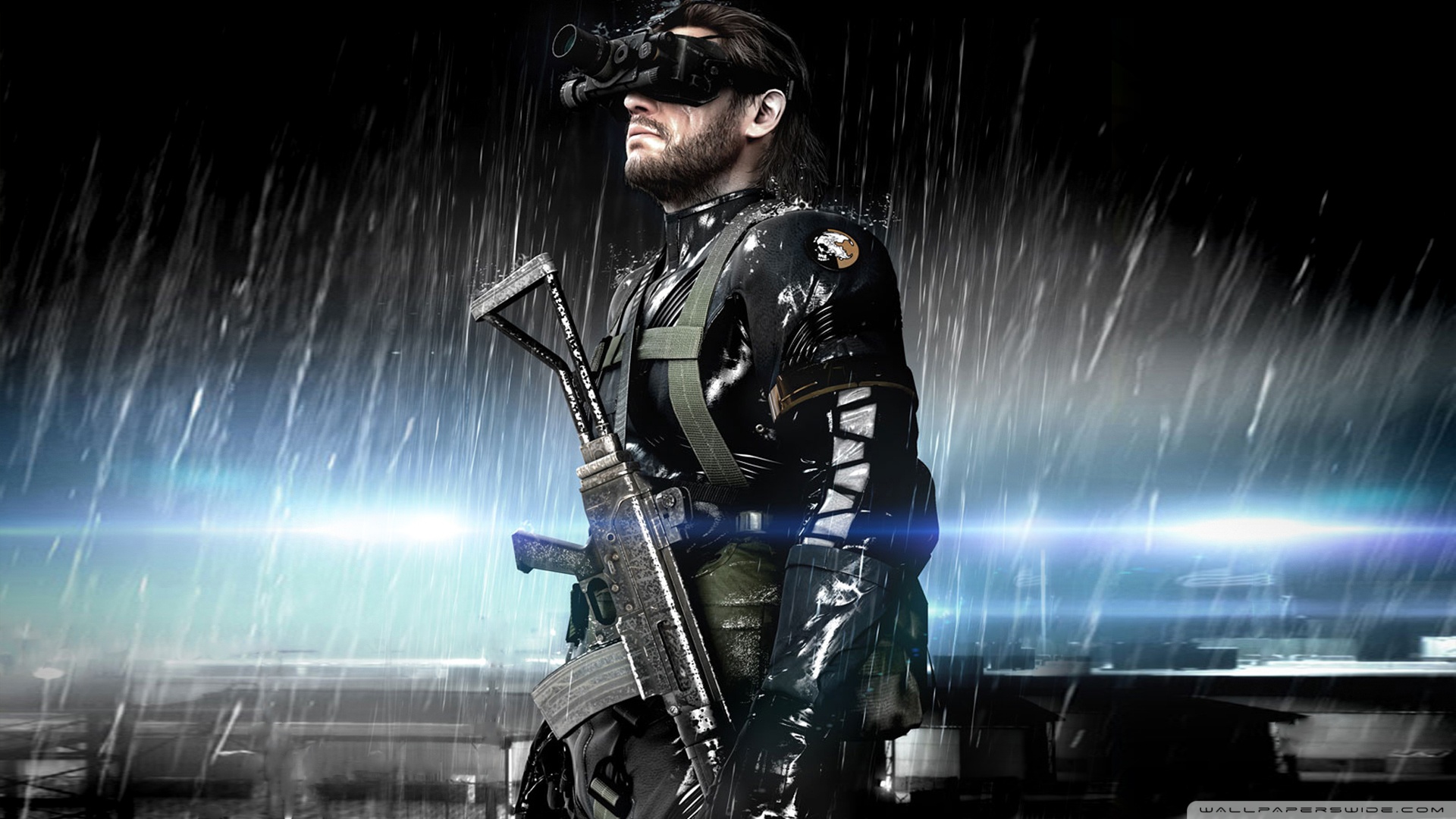
Arriving a year and a half before The Phantom Pain, Ground Zeroes proved to be less of a vertical slice and more of a tech demo, introducing stalwarts and newcomers alike to the various gameplay mechanics and open-world systems. Lambasted for its length, Big Boss’ debut on PS4 did boast a ton of replayability via the Side Ops missions, but its core story proved to be overly forgettable.
Infiltrating a Cuban refugee facility known as Camp Omega, Snake begrudgingly agrees to rescue double (triple?) Peace Walker agent, Paz Ortega Andrade. Drenched from a seemingly relentless downpour, the Big Boss we are introduced to is a world-weary veteran, and when the credits roll on Ground Zeroes, our protagonist slips into a nine-year coma.
Acting as a prologue for the main event, Ground Zeroes may have been divisive, but like pizza, even when Metal Gear is bad or underwhelming, it’s still pretty damn good.
Check out our review of Big Boss' defining trip to Camp Omega.
-
9. Portable Ops
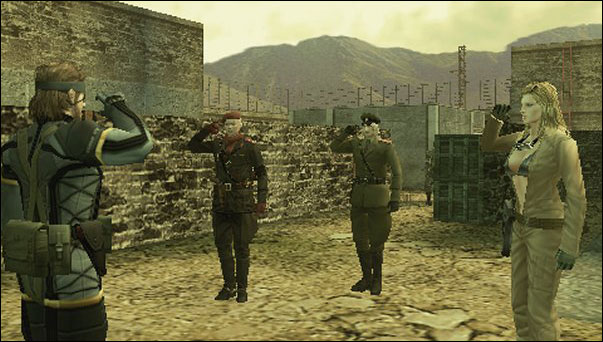
Set six years after the defining events of Snake Eater, Portable Ops was an ambitious if flawed PSP offering. Featuring a rudimentary online component and a recruiting system that would go on to inform Peace Walker, Kojima’s handheld stealth experience was hamstrung by an awkward control system and slow-burning story.
Here, we begin to see the first signs of Big Boss’ fall from grace. Armed with half of the sought-after Philosopher’s Legacy, throughout the course of Portable Ops Snake begins to question his allegiances to the United States of A, slowly transforming into the big bad that Solid Snake, his son, would eventually have to take down across the Metal Gear titles.
-
8 & 7. Metal Gear & Metal Gear 2
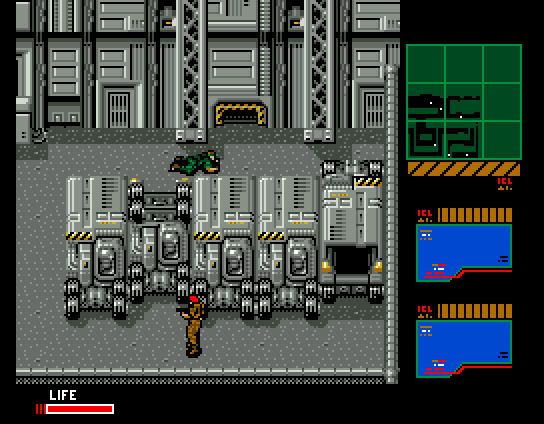
Released in 1987 and 1980, respectively, Metal Gear and Metal Gear 2 represent the original series in all of their crude, blossoming glory. Ever wonder why the Solid Snake we are introduced to in Metal Gear Solid is held up as a legend? That’s because our cloned super-soldier earned his stripes across excursions in Outer Heaven and Zanzibar Land.
Both titles are, as one would expect, crucial to the franchise in the sense that they not only kickstarted a medium-defining legacy, but they also harbor the stylistics tendencies of an auteur in training. Speaking of which, reports suggest that Kojima is gearing up to conclude The Phantom Pain with the beginning of ’87’s Metal Gear, thus closing the loop on his incredible opus.
-
6. Guns of the Patriots
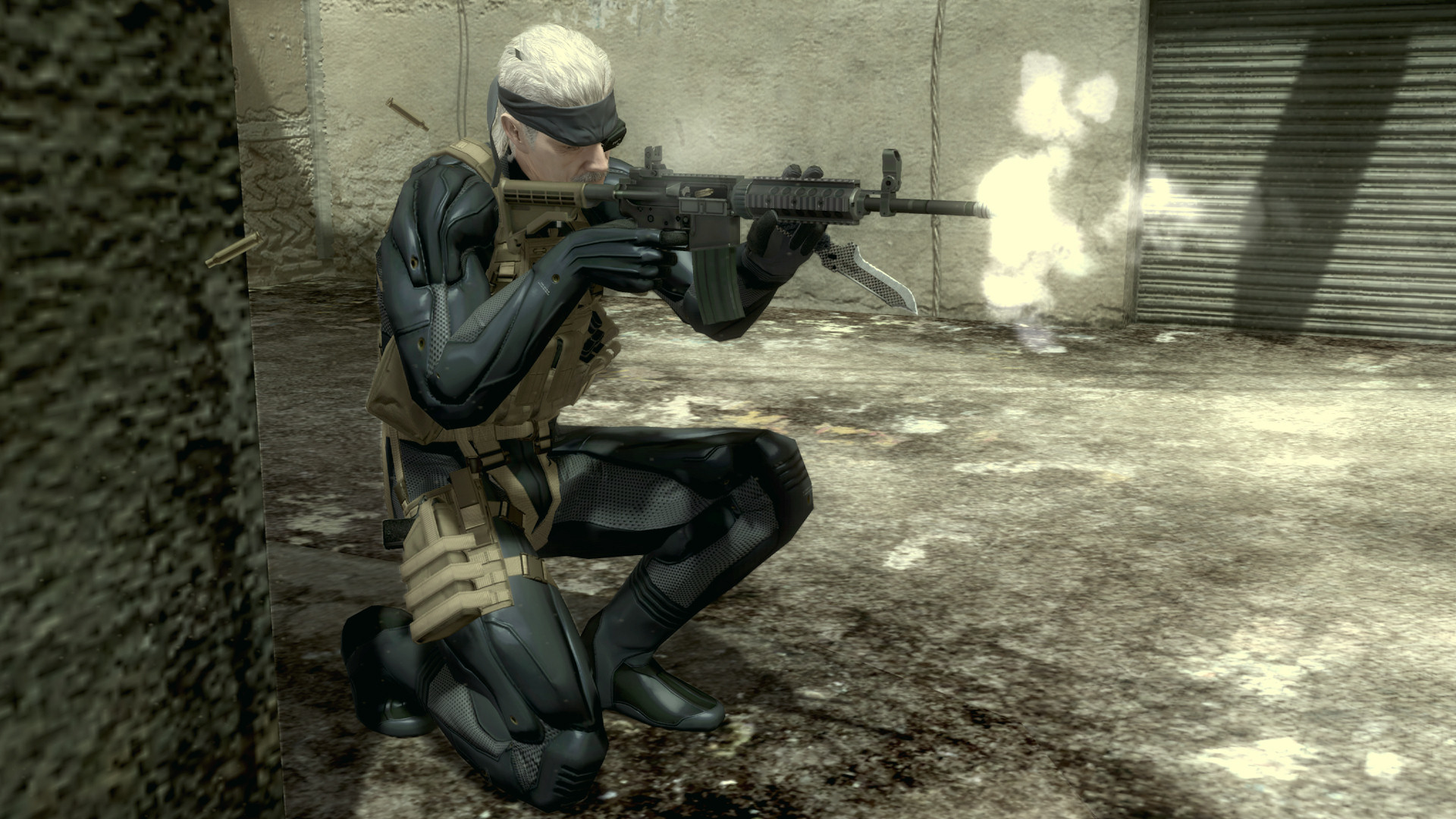
For an enthralling Metal Gear experience that encompasses crawling through a microwave tunnel, blowing the dust off Metal Gear REX to lock horns with RAY, and a sombre conclusion to rival any video game ending, it’s a wonder that Guns of the Patriots enters our list in fifth place. It’s a testimony to Kojima’s franchise, then, that MGS 4 is still widely held up as one of PlayStation 3’s bona fide masterpieces despite not standing as the out-and-out favorite.
What separates Guns of the Patriots from its peers is that it offers something that Metal Gear games have but teased in the past: resolution. Set in the year 2014, Kojima’s sequel calls a rapidly aging out of retirement (again!) to stop Liquid Ocelot once and for all. From Eastern Europe to the Middle East, MGS 4 is a true globe-trotting adventure, and it’s one that is simply brimming with nostalgia.
As we touched upon in our Top 5 MGS Moments video, it really is the return to Shadow Moses that stands the test of time.
Check out our review of Solid Snake's final adventure here.
-
5. Peace Walker
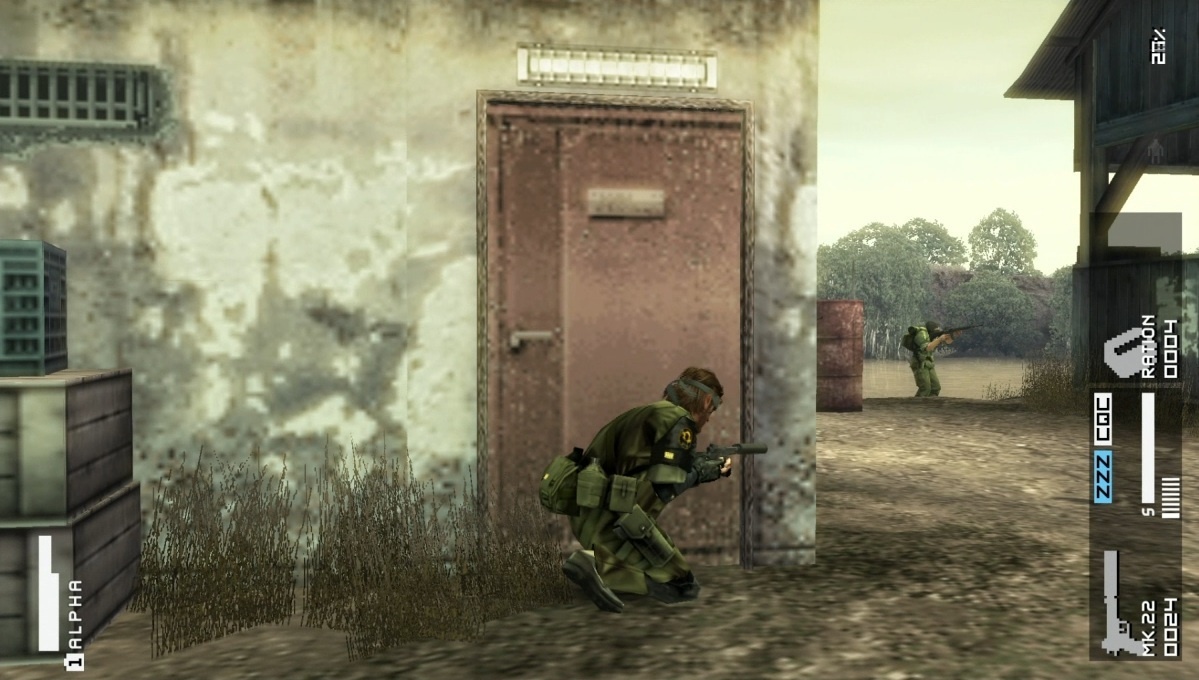
Remaining with Big Boss for the time being and our next contender ushers in PSP classic, Peace Walker. Leading the charge for the Militaires Sans Frontières, the portable stealth hit sends Big Boss and Kazuhira Miller into Costa Rica in order to foil yet another nuclear masterplan.
Peace Walker is the name and advanced artificial intelligence is the game, with the bi-pedal war machine built using the personality of our hero’s old mentor, The Boss. Struggling to believe his ears, Big Boss then plots course for the compound, entering a tussle with deranged CIA agent, Hot Coldman.
Few PSP games boast the scale and scope of Peace Walker, and the fact that Kojima Productions wrangled the intricate gameplay of Metal Gear onto Sony’s handheld is a feat in and of itself. There’s also plenty of new faces to familiarise yourself with in the build-up to Ground Zeroes and MGS V — faces such as Paz Ortega Andrade and Hal’s father, Huey Emmerich.Indeed of all the Metal Gears that have led up to The Phantom Pain’s release, Peace Walker essentially acts as its pixelated foundation, harboring the mission-based gameplay, Fulton system and sprawling Mother Base that will all feature in the imminent sequel. And we can hardly wait.
Journey back through time with our review of the PSP classic.
-
4. Sons of Liberty
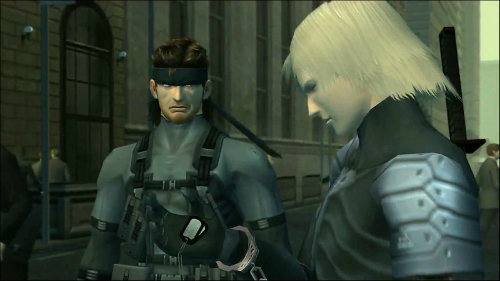
Solid Snake and Otacon return in Metal Gear Solid 2: Sons of Liberty — but not as you know them. Flying the flag for nuclear disarmament under the Philanthropy group, the old pals are tackling a new threat that has emerged revolving around the Metal Gear tech. Barring a brief prologue aboard the USS Discovery, Snake and his bumbling ally are put on the back-burner to make room for Raiden, the effeminate FOXHOUND agent who, to put it lightly, proved to be one of the series’ more divisive characters.
His mission? To infiltrate the terrorist-occupied Big Shell and rescue the President from the claws of Dead Cell and the titular, nefarious group. There’s a much bigger plan in play, though, one that pulls the rug out from under the player as much as it does Raiden; the entire incident was a simulation orchestrated by The Patriots.
What makes this famed plot twist all the more effective is the fact that Raiden stands as the ultimate audience surrogate. Fans may have taken umbrage with the blonde-haired rookie upon release — he is essentially the ying to Snake’s gruff, battle-worn yang, after all — but putting players in control of Jack the Ripper was a misunderstood stroke of genius.
It’s no secret that Solid Snake becomes a more rounded character in Sons of Liberty — and not just because of the graphical leap from MGS 1. By distancing us from the gravel-voiced hero, we not only appreciate Snake objectively, but doing so also adds a commentary to MGS 2 about sequels and our own expectations of them.
This all comes to a head during the oft-quoted ‘Fission Mailed’ segment. We, the player, have lived through an experience much like that from Shadow Moses, with mission layout in MGS 2 resembling its predecessor not to mention characters reciting old lines of dialogue. The final boundary stands between the player and the screen — and you know how little Kojima cares for that fourth wall.
-
3. The Phantom Pain
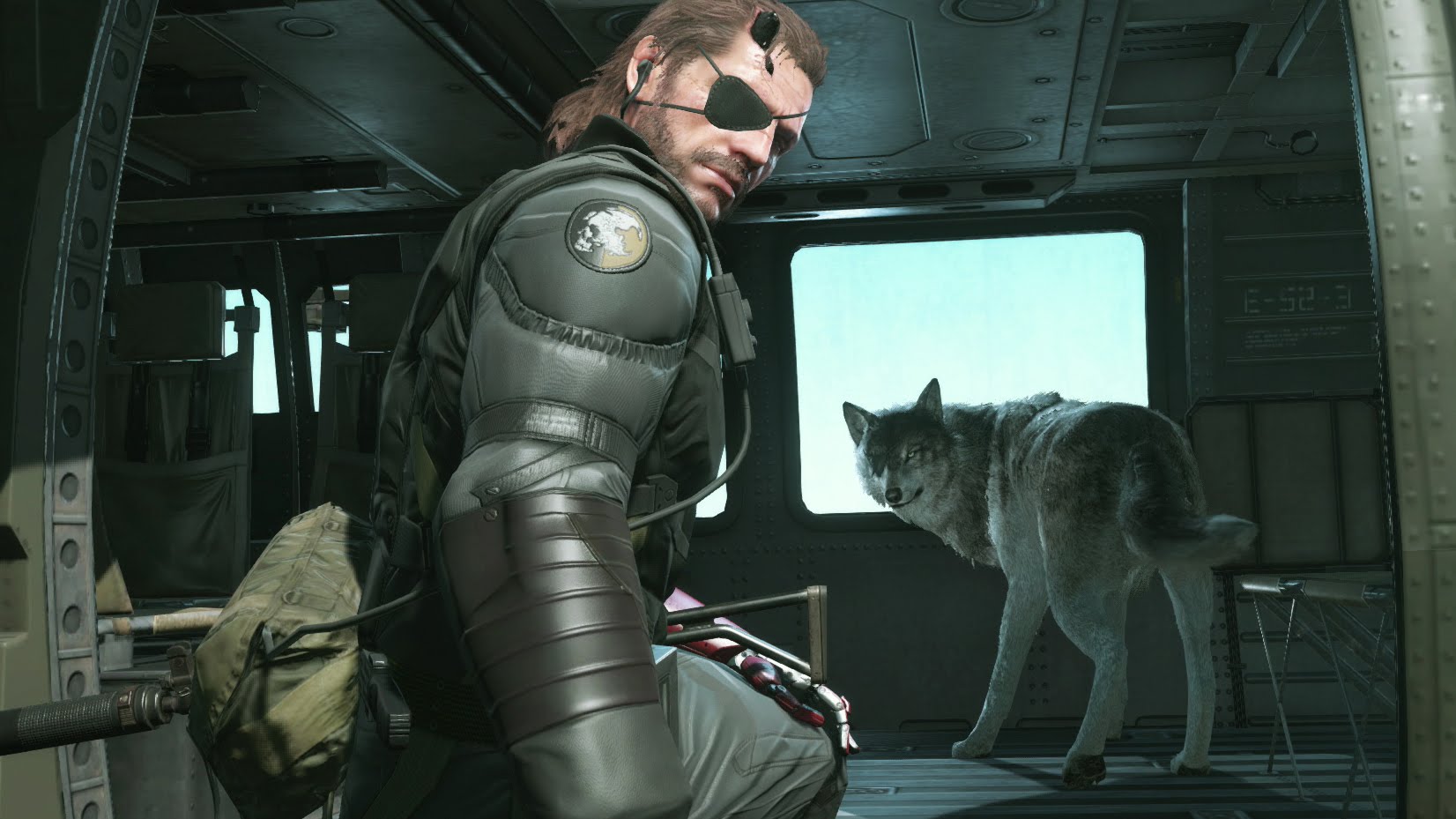
Kept you waiting, huh? A full seven years after the release of Guns of the Patriots, Kojima Productions has debuted what many consider to be its magnum opus. It's too soon to tell whether The Phantom Pain can go on to top the pile as the best Metal Gear game, but after receiving top honors in our glowing review, we would be remised if it wasn't included in the top three.
Charting Big Boss' torturous rise from the dead, The Phantom Pain has our battle-worn protagonist make tracks for Afghanistan to rescue an old comrade in Kazuhira Miller, reuniting with Revolver Ocelot (Troy Baker) along the way. Given that the sequel is still fresh on the market, we'll refrain from delving into the actual story too much.
Even still, this is Peace Walker 2.0; a sprawling and gorgeous sequel (prequel?) that expands its mission-based gameplay across a vast open world. For a franchise renown for clunky controls, The Phantom Pain's gameplay is par excellence, refining the systems introduced in last year's Ground Zeroes to the nth degree. The result? One of the best stealth titles ever made, and a frontrunner for 2015's coveted Game of the Year accolade.
Whether it can truly top the remaining entries on this list, however, will ultimately be told in time.
-
2. Metal Gear Solid
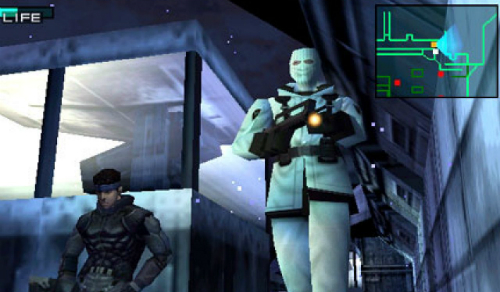
Coming in at a very — very — close second place is Metal Gear Solid. Not only did the thriller represent the franchise’s graduation to three dimensions in ’98, MGS on PSOne was a defining turning point in the trajectory of both the series and its creator. To say that Metal Gear Solid single-handedly popularized the stealth genre may read as hyperbole, but it doesn’t stray too far from the truth.
Solid Snake infiltrating Shadow Moses still stands as one of our fondest memories, from the poignant battle with Sniper Wolf to Psycho Mantis seemingly reading our thoughts and berating us for our love of RPGs. Few games have or will ever come close to that intoxicating rush of evading enemy guards, not to mention exploring such a rich and detailed environment — remembering striking up those wonderful weird codec conversations while hunkered down in a cardboard box?
All in all, Metal Gear Solid was pipped at the post by Sons of Liberty in the gameplay department. Neither stealth title is perfect, of course, though it’s the latter that took advantage of its sequel status and offered up a more polished, free-flowing experience.
Even still, MGS in PSOne was the one to introduce Hideo Kojima’s ingenuity to a worldwide audience — and for that, it will always hold a special place in our hearts.
-
1. Snake Eater
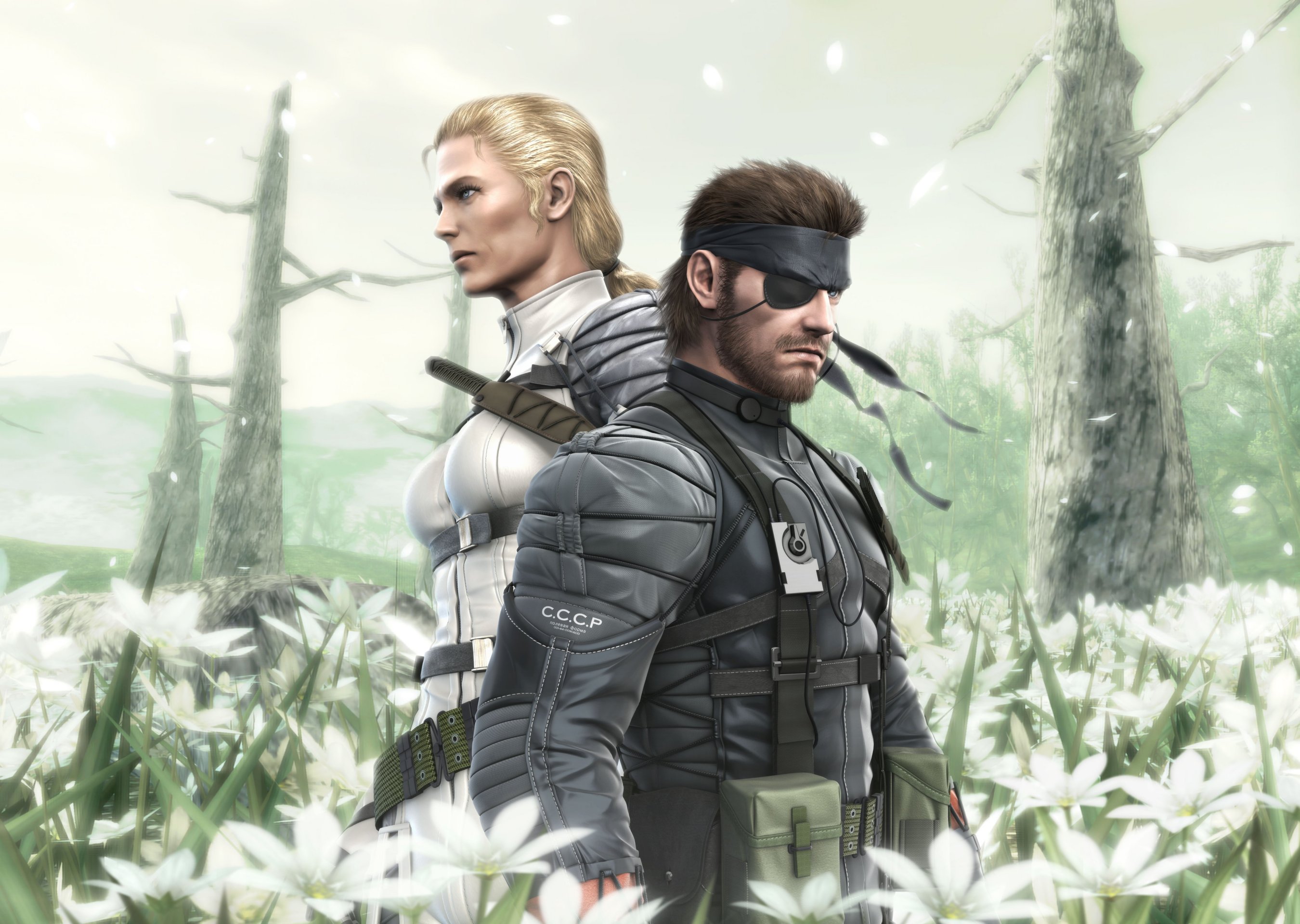
If we were to describe Snake Eater in a single word, it would be raw. Naked Snake’s tormented trek into the depths of the Soviet Jungle brought us right back to the beginning of the Metal Gear lore, in a time when Major Zero was still seemingly on your side and Les Enfants Terribles was but a pie-in-the-sky concept.
For Snake Eater, Kojima served up a memorable, heart-felt blast from the past that charted the untold story of how Naked Snake would go on to earn the decorated Big Boss accolade we know and respect. Set against the backdrop of the Cold War, Snake Eater introduced a lot of new mechanics into the adorned series. Chief among those was the survival elements — and literal snake eating — along with the CQC (Close Quarters Combat) to would become indispensable in the final, heart-wrenching battle with The Boss. We’re not crying, you’re crying…
Metal Gear Solid: Snake Eater ultimately earns first place for its bold, compelling story about Big Boss’ rise to prominence. If that wasn’t enough, it also includes one of the greatest boss battles in gaming history in The End — or quickest, if you so choose to reset your PS3 clock.